
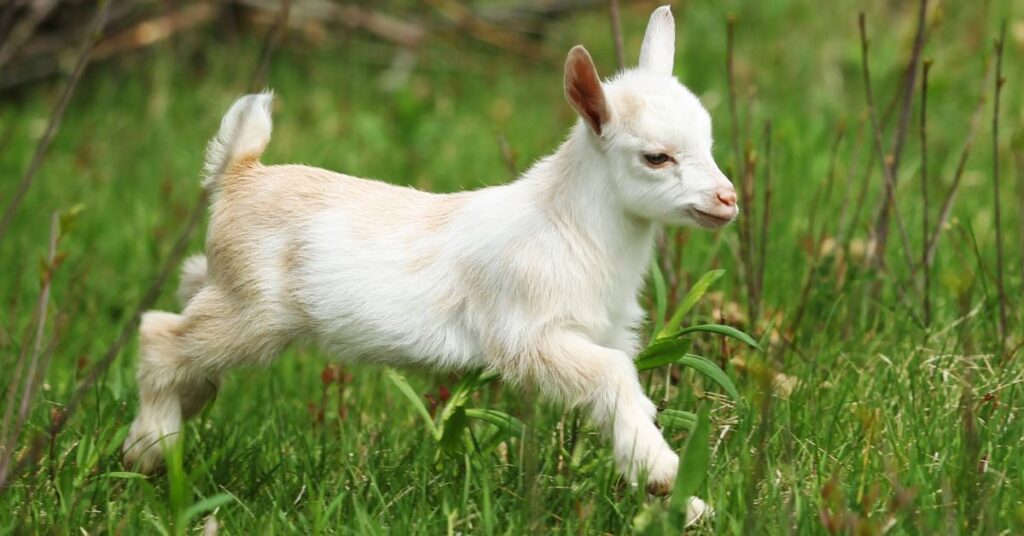
The Charm and History of Fainting Goats
Fainting goats — officially known as Tennessee Myotonic Goats — are one of the most recognizable and endearing breeds in the goat world. Their name comes from the genetic trait that causes their muscles to stiffen briefly when startled. They don’t lose consciousness, they don’t experience pain, and they don’t “faint” the way people imagine. Instead, their legs lock for a few seconds, and then they get right back up and carry on like nothing happened.
At Hope Farms in Richfield, North Carolina, fainting goats quickly became one of our favorite animals to raise. They are friendly, easygoing, gentle with children, and far less mischievous than other breeds. They’re also a fascinating part of American agricultural history — a heritage breed with roots that go back more than a century.
Where Fainting Goats Came From
A True American Heritage Breed
The origin story of fainting goats starts in the late 1800s, when a man arrived in Tennessee with a small group of unusual goats that stiffened when startled. Local farmers noticed that the breed:
- Didn’t climb or jump fences
- Moved more slowly than standard goats
- Had excellent meat conformation
- Was quiet and gentle
Because of this, the breed spread across the South, especially through Tennessee and Texas. Their unique myotonia trait was never bred out because it actually made them easier to manage.
Fainting goats are now recognized as a heritage breed, and preserving them helps keep part of America’s agricultural history alive.
Understanding the “Faint” — What Really Happens
People often misunderstand fainting goats because the videos online make it look dramatic. In reality, the stiffening is mild, brief, and harmless.
Myotonia Explained Simply
Myotonia congenita is the genetic trait responsible. When startled:
- The goat’s muscles contract.
- The muscles take a moment to relax.
- The goat may tip over, freeze in place, or wobble briefly.
- Within 2–5 seconds, the goat is fine and moving again.
Most fainting goats “faint” less as they mature because they learn how not to fall. They brace themselves, widen their stance, or simply stiffen in place.
It’s more quirky than concerning — and it’s part of what makes them a fun, low-stress breed.
Temperament That Makes Them Ideal for Small Farms
Ask anyone who raises fainting goats, and they’ll tell you the same thing:
These goats have some of the best personalities of any breed.
They are:
- Gentle
- Calm
- Affectionate
- Good with children
- Low-energy compared to typical goats
- Less likely to escape or break fences
This makes them perfect for:
- Family farms
- First-time goat owners
- Homesteaders
- Hobby farms
- Small acreage properties
They’re easy to work with and bond strongly with their herd and their human caretakers.
Why Fainting Goats Are Easier to Manage
Less Jumping, Less Climbing, Less Trouble
Most goat breeds see a fence and think: “Challenge accepted.”
Fainting goats? They look at the same fence and think: “Nah, we’re good.”
Because they’re slower and more grounded, fainting goats rarely:
- Jump over fencing
- Stand on top of structures
- Escape through tiny gaps
- Destroy barns or gates
This is one of the biggest reasons families and beginners love them. You can enjoy the fun parts of goat ownership — the personalities, the companionship, the adorable babies — without the constant battle of outsmarting a hyperactive goat.
Care Requirements — Simple, Manageable, and Beginner-Friendly
Fainting goats don’t require complicated care. They need the basics, handled consistently:
- Secure fencing
- Dry, draft-free shelter
- Fresh water
- Quality hay
- Grain only if recommended by your vet
- Loose minerals formulated for goats
- Clean bedding
- Routine hoof trims
- Basic parasite management
Goats Are Herd Animals
No goat should ever live alone. Fainting goats thrive in pairs or small groups. They rely on each other for safety, comfort, and mental well-being. Two goats is the minimum — but three or more is even better.
The Joys of Raising Fainting Goats at Hope Farms
Our fainting goats have brought more personality to our farm than we ever expected. Each one has its own quirks:
- Some are brave and bold
- Some are shy and sweet
- Some follow us like dogs
- Some prefer to nap all afternoon
- Some faint more than others
They’re gentle, comical, and endlessly entertaining — and no two goats are ever the same.
They’ve been wonderful with visiting families and photographers, too. People often fall in love with them instantly, especially kids who can’t believe how friendly and calm they are.
Why Fainting Goats Are Becoming More Popular
Across North Carolina and the Southeast, fainting goats are rising in popularity because they’re:
- Affordable
- Low-maintenance
- Herd-friendly
- Great for land clearing
- Ideal for small farms
- Charming companions
And, of course, they are an absolute hit on social media — people adore them.
More importantly, preserving fainting goats supports a heritage breed worth protecting.
Are Fainting Goats Right for You?
They might be if you want:
- A calm goat that doesn’t jump fences
- A friendly farm companion
- A safe breed for children
- A manageable herd for beginners
- A unique and historically significant animal
- A goat with personality but not chaos
If you want a high-energy escape artist, this isn’t the breed.
If you want a reliable, sweet, steady farm animal — fainting goats are perfect.
Final Thoughts — Why We Love This Breed
For us at Hope Farms, fainting goats represent everything we value:
- Simple living
- Manageable care
- Gentle personalities
- Heritage breeds
- Low-stress farming
- Animals that fit our family lifestyle
They bring humor, heart, and a touch of history to our farm — and we’re proud to raise them.